Guide to Hurricane Resistant Sliding Glass Doors: Standards & Costs
A Comprehensive Guide to Hurricane-Resistant Sliding Glass Doors
Hurricane-resistant sliding glass doors are specialized building components engineered to maintain the structural integrity of a home’s envelope during extreme weather events. Unlike standard glass doors, which can shatter under the pressure of high winds or the impact of wind-borne debris, these systems utilize reinforced frames and laminated glass to prevent catastrophic failure. Protecting these large openings is a critical aspect of modern coastal construction and renovation.
This guide provides a neutral, educational overview of how these systems function, the various materials available, and the logistical considerations involved in their installation. Readers will learn about the technical standards required for storm protection, how to evaluate different configurations, and the long-term maintenance necessary to ensure that hurricane resistant sliding glass doors perform as intended when a storm strikes.

Overview of Hurricane-Resistant Sliding Glass Doors
The primary purpose of hurricane resistant sliding glass doors is to prevent the “breach” of a building’s envelope. In a hurricane, if a large opening like a sliding door fails, wind rushes into the structure, creating a rapid increase in internal pressure. This internal pressure, combined with the external suction (negative pressure) on the opposite side of the building, can lead to the lifting of the roof or the collapse of interior walls.
These doors are engineered to withstand two distinct forces: the physical impact of flying objects (missile impact) and the sustained cycling of high-pressure winds (wind load). To achieve this, the glass is constructed of a “sandwich” of two glass panes bonded to a heavy-duty polymer interlayer. Even if the glass cracks upon impact, the interlayer holds the fragments together, keeping the opening sealed. Homeowners typically choose these systems to eliminate the need for manual storm shutters while gaining year-round benefits such as increased security, noise reduction, and UV protection.
Key Categories and Material Types
The performance and hurricane resistant sliding glass doors cost are largely determined by the frame material and the specific type of glass interlayer used.
| Category / Type | Description | Common Use Case | Effort / Cost Level |
| Aluminum Frames | Heavy-duty, corrosion-resistant metal with high structural strength. | High-rise condos and large “multi-slide” openings. | High / Premium |
| Vinyl Frames | Rigid PVC with multi-chambered profiles for thermal insulation. | Residential homes focused on energy efficiency. | Moderate / Mid-Range |
| PVB Interlayer | Standard Polyvinyl Butyral plastic film between glass panes. | General residential storm protection. | Low / Standard |
| SentryGlas (SGP) | An ionoplast interlayer that is five times stronger than PVB. | High-velocity hurricane zones (HVHZ) or large glass spans. | High / Very High |
| Thermally Broken | Aluminum frames with a non-conductive bridge to block heat. | Coastal areas with extreme heat or cold. | Moderate / Premium |
Choosing between these options requires an assessment of local building codes. Aluminum is often preferred for its slim profiles and strength in very large openings, while vinyl is selected for its superior insulating properties in suburban residential settings.
Practical Scenarios for Door Selection
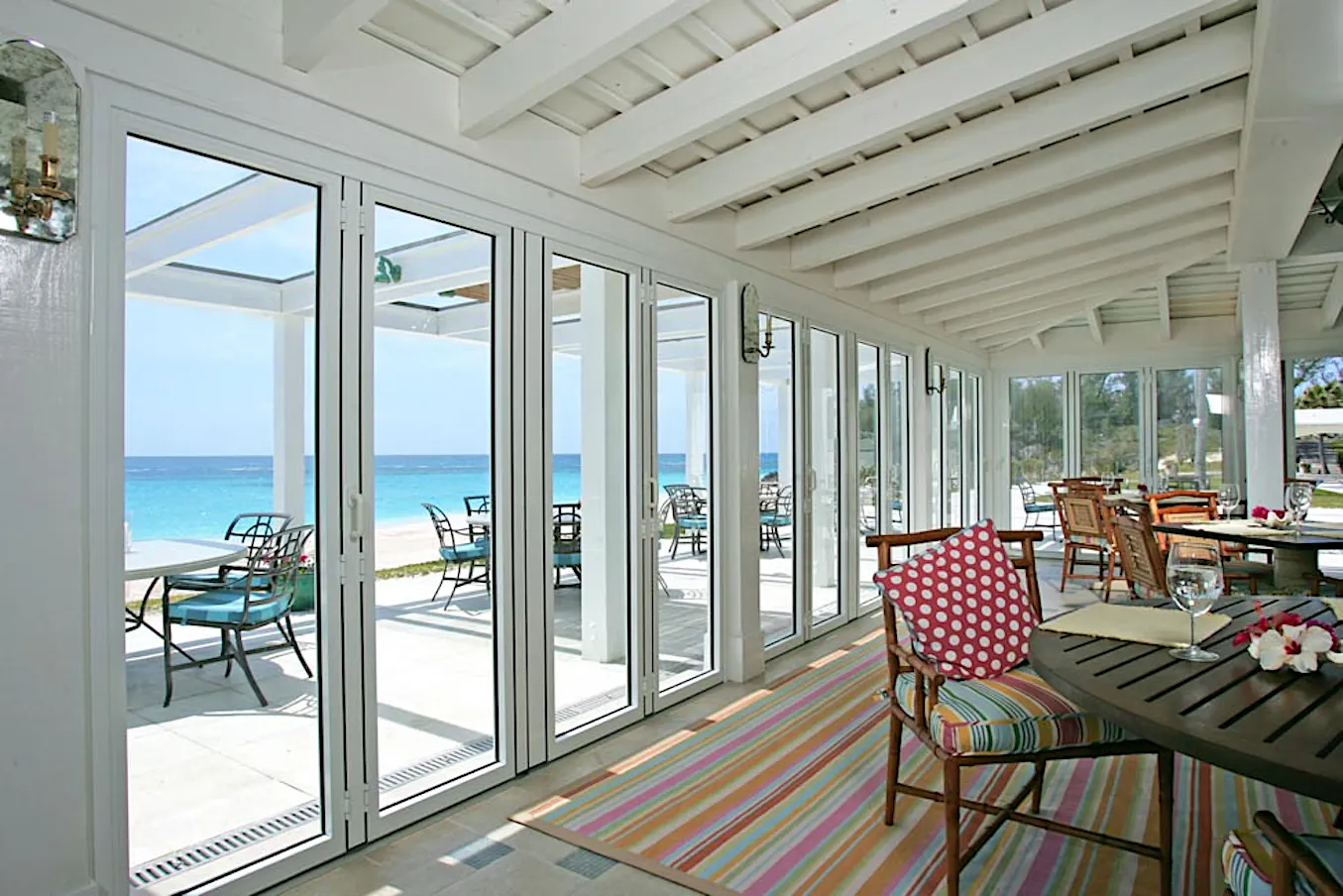
Scenario 1: The Beachfront Replacement
Properties within a mile of the ocean face constant salt spray, which can corrode standard hardware and “pit” aluminum finishes.
-
Components: Marine-grade 316 stainless steel hardware, Kynar-coated aluminum frames, and SGP interlayers.
-
Process: Remove old salt-damaged frames, treat the rough opening for moisture, and install a corrosion-resistant track system.
-
Relevance: Standard components fail prematurely in saline environments; marine-grade materials ensure the door remains operable after years of salt exposure.
Scenario 2: The Multi-Panel “Great Room”
Modern architectural designs often feature “moving glass walls” that consist of four or more panels that slide into a wall pocket.
-
Components: Tandem stainless steel rollers, reinforced sill drainage, and multi-point locking systems.
-
Process: Structural engineering of the header to support the weight, precise leveling of the track, and synchronization of the panels.
-
Relevance: Large glass spans create immense surface area for wind pressure; high Design Pressure (DP) ratings are essential for these configurations.
Scenario 3: The Energy-Efficient Retrofit
Homeowners in hurricane-prone regions who are also concerned with rising cooling costs may prioritize thermal performance alongside safety.
-
Components: Vinyl frames, Argon gas-filled insulated glass units (IGUs), and Low-E coatings.
-
Process: Measuring existing openings for “insert” or “full-frame” fit and ensuring the new sill meets the floor height without a trip hazard.
-
Relevance: This scenario balances the safety of hurricane resistant sliding glass doors with the practical need to reduce solar heat gain in tropical climates.
Comparison: Scenario 1 focuses on chemical durability (salt), Scenario 2 focuses on structural scale and mechanics, and Scenario 3 focuses on thermal efficiency. Readers should align their choice with the specific environmental stressor most prevalent at their property.
Planning, Budgeting, and Resource Considerations
Meticulous planning is required because impact doors are significantly heavier than standard doors, often requiring two to four technicians for a single installation. Budgeting must account for the door unit, labor, and potential structural modifications.
| Category | Estimated Amount (Example) | Explanation | Optimization Tips |
| Impact Door Unit | $2,500 – $6,000 | The cost of the door, frame, and glass. | Standard sizes (e.g., 6’x8′) are much cheaper than custom. |
| Installation Labor | $800 – $2,000 | Specialized labor for heavy, precise fitting. | Group installations to reduce mobilization fees. |
| Permitting/Fees | $150 – $500 | Local building department inspections. | Check if the contractor manages the permit process. |
| Structural Header | $500 – $1,500 | Reinforcing the wall to carry the extra weight. | Assess the lintel condition before ordering the door. |
Note: These figures are examples for educational purposes; actual costs will vary based on the specific “Design Pressure” rating and glass thickness required by local code.
Strategies for Performance Evaluation
To ensure a door meets the necessary safety standards, property owners should utilize the following evaluation strategies:
-
Design Pressure (DP) Rating: A numerical value representing the wind load a door can handle.
-
Advantage: Provides a clear metric for structural strength (e.g., DP-50 vs DP-70).
-
Disadvantage: High ratings can sometimes result in heavier, harder-to-operate panels.
-
-
Notice of Acceptance (NOA): A document issued by authorities (like Miami-Dade County) certifying a product’s performance.
-
Advantage: This is the “gold standard” for hurricane proofing and simplifies the permit process.
-
Disadvantage: Limited to specific brands that have paid for the rigorous testing.
-
-
Cyclic Pressure Testing: A test where the door is hit by thousands of “puffs” of wind.
-
Advantage: Simulates the reality of a multi-hour storm rather than a single gust.
-
Disadvantage: Testing results are technical and can be difficult for laypeople to interpret.
-
-
ASTM E1886/E1996 Standards: The national standard for missile impact and pressure cycling.
-
Advantage: Ensures the door meets a baseline safety requirement regardless of the brand.
-
Disadvantage: Some coastal zones require even higher standards (like HVHZ).
-
Safety, Risks, and Common Challenges
-
Improper Anchoring: Because of the extreme weight and wind loads, these doors must be anchored into the building’s structural frame (concrete or wood studs). If anchored only into the drywall or light trim, the entire unit can blow out during a storm.
-
Seal Failure and Leaks: High-wind-driven rain can be forced under the door’s sill. If the “weep holes” (drainage) are blocked or if the sill is not properly pitched, water will enter the home.
-
Hardware Jamming: The rollers on impact doors must carry much more weight than standard doors. If the track is not perfectly level, the rollers can flat-spot, making the door nearly impossible to open.
-
The “Torsion” Effect: In a storm, the wind can pull the door outward. If the tracks are not deep enough, the glass panels can “walk” out of the frame. Ensuring the door has deep “overlap” in the tracks is a key safety check.
Maintenance and Long-Term Management
Ongoing maintenance is the only way to ensure that the investment in hurricane resistant sliding glass doors remains functional during an emergency.
-
Quarterly Track Cleaning: Use a vacuum and damp cloth to remove sand and debris. Debris in the track acts like sandpaper on the rollers.
-
Silicone Lubrication: Apply a dry silicone spray to the tracks and lock mechanisms. Avoid oil-based lubricants, which attract dirt.
-
Weep Hole Inspection: Pour water into the sill once a year to ensure it drains to the outside. If water pools, use a small wire to clear the drainage holes.
-
Seal Integrity Check: Inspect the weatherstripping for “shrinkage” or cracks. Replace any rubber seals that have become brittle from UV exposure.
Documentation and Compliance Reporting
Documentation is essential for verifying code compliance and securing insurance discounts. Most insurers in hurricane-prone states provide a “wind mitigation” credit for homes with protected openings.
-
Product Stickers: Do not remove the small NFRC or safety stickers from the glass until after the final building inspection.
-
The NOA Packet: Keep a copy of the manufacturer’s testing certification in a safe place.
-
Installation Photos: For insurance purposes, photograph the anchoring screws before the trim is applied to prove the door is tied into the structure.
Example 1: A homeowner uses their NOA document to reduce their annual insurance premium by 15%.
Example 2: During a home sale, the owner provides the “Wind Mitigation Report” to prove the property meets the latest 2026 building codes.
Closing Summary
Hurricane-resistant sliding glass doors are complex engineering systems that provide vital structural protection and everyday functionality. By selecting the appropriate frame materials, ensuring professional anchoring, and performing regular maintenance on the tracks and seals, property owners can significantly reduce the risk of catastrophic building failure during a major storm.