Modern Pergola Design with Louvered Roof: A Technical Guide
A Technical Guide to Modern Pergola Design with Louvered Roof Systems
The architectural evolution of outdoor living spaces has led to the development of highly adaptable structures that provide both aesthetic value and environmental control. Traditionally, pergolas were static wooden structures designed to support climbing plants or provide dappled shade. However, the introduction of the louvered roof—a system of adjustable slats—has transformed the pergola into a dynamic building component capable of responding to changing weather conditions in real time.
This guide provides an objective, educational analysis of the engineering and aesthetic principles behind a modern pergola design with louvered roof. Readers will explore the mechanical variations of these systems, the structural materials used in their construction, and the logistical considerations required for successful integration into a residential or commercial landscape. By understanding the intersection of architectural design and mechanical functionality, property owners can make informed decisions regarding the climate-readiness and longevity of their outdoor investments.

Overview of Modern Pergola Design with Louvered Roof
The core concept of a modern pergola design with louvered roof is the “bioclimatic” approach to outdoor architecture. This refers to a structure’s ability to regulate its own microclimate by manipulating the angle of its roof slats, or louvers. In the open position, the louvers allow for maximum airflow and natural light; when angled, they provide shade while maintaining ventilation; and when fully closed, they create a watertight seal to protect the area below from rain or snow.
Property owners typically utilize these systems to bridge the gap between a fully enclosed sunroom and an open patio. The primary goals are usually to extend the usability of outdoor spaces throughout the seasons and to protect high-end outdoor furniture or kitchens from UV degradation and precipitation. Expectations for a modern system include precision engineering, often involving extruded aluminum components, integrated gutter systems for water management, and motorized automation that allows for remote or sensor-based adjustments.
Key Categories and System Variations
Louvered pergolas are categorized by their mounting style and the mechanical complexity of the louver movement.
| Category / Type | Description | Common Use Case | Time / Cost / Effort Level |
| Freestanding | Independent structure supported by four or more posts. | Centerpiece for gardens, poolside decks, or remote patios. | High / Premium |
| Attached (Lean-to) | One side is mounted directly to the building’s ledger board. | Extension of an indoor living room or kitchen. | Moderate / Mid-Range |
| Manual Pivot | Louvers are adjusted by a hand-crank mechanism. | Budget-conscious projects or remote areas without power. | Low / Economical |
| Motorized Pivot | Electric actuators rotate louvers via remote or switch. | Standard modern residential installations. | Moderate / Mid-Range |
| Retractable Louvers | Slats both rotate and slide back to completely clear the roof. | Maximum versatility for stargazing or full sun exposure. | High / Luxury |
Choosing between these categories depends on the existing architecture and the intended level of automation. For example, a freestanding structure offers more design freedom but requires significant footer excavation, whereas an attached modern pergola design with louvered roof must be carefully engineered to ensure the home’s wall can support the lateral load of the structure.
Practical Scenarios and Applications
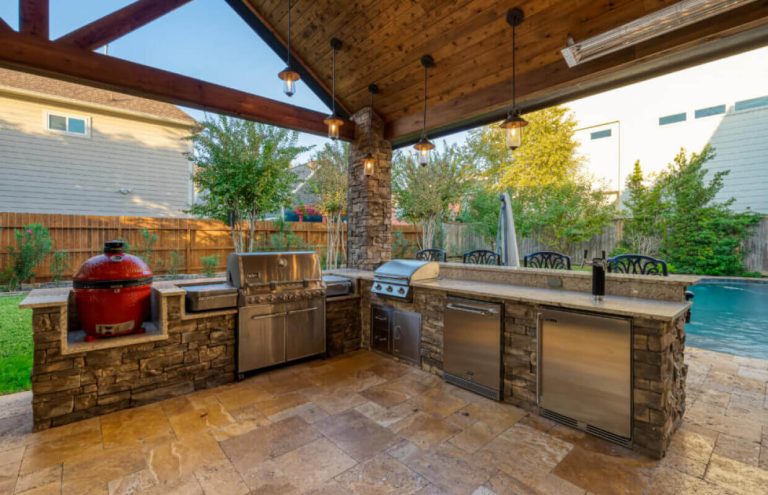
Scenario 1: The Integrated Outdoor Kitchen
Outdoor culinary spaces require ventilation to exhaust smoke from grills while protecting expensive appliances from rain.
-
Components: Motorized aluminum louvers, integrated LED lighting, and wind sensors.
-
Process: Positioning the pergola over the grill island, ensuring the louvers open to at least 120 degrees for maximum smoke ventilation.
-
Relevance: This scenario demonstrates the system’s ability to act as a functional exhaust hood when open and a protective roof when closed.
Scenario 2: The Poolside Transition Zone
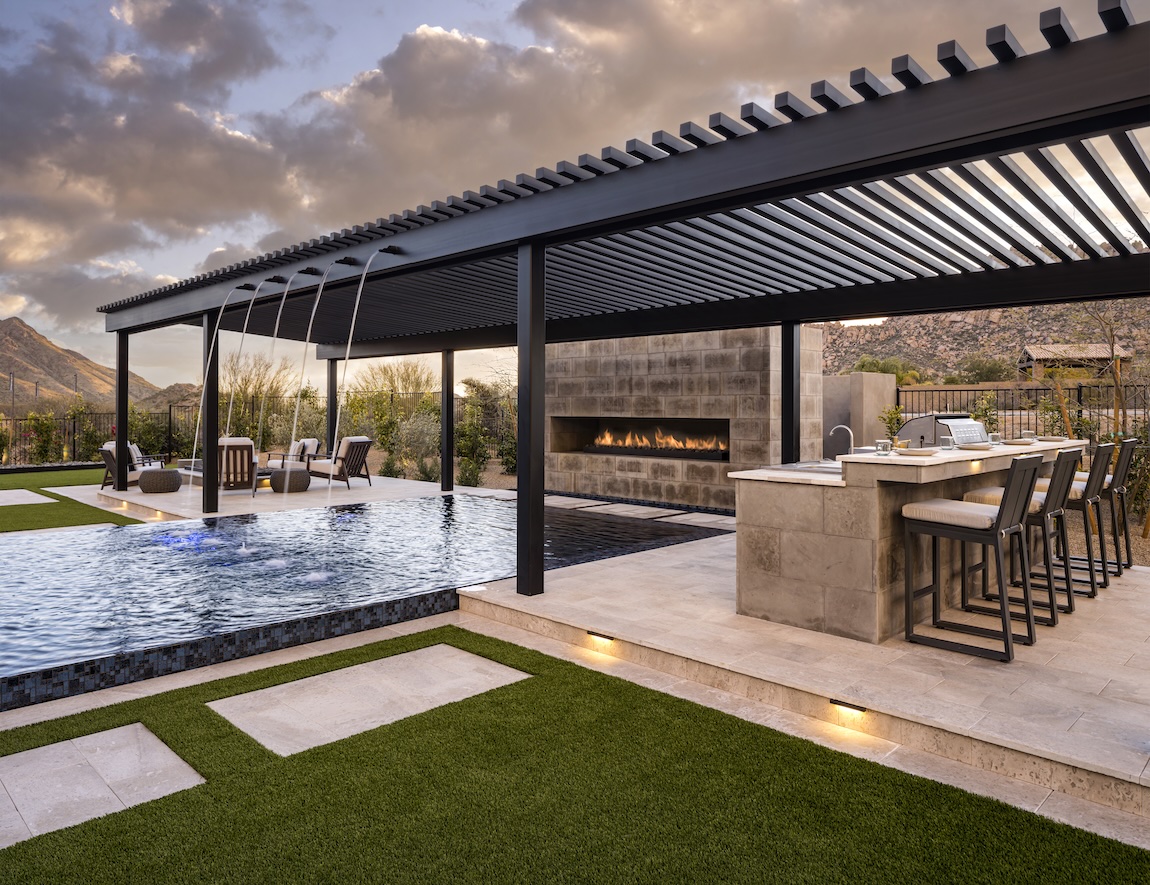
Creating a shaded retreat that can withstand high humidity and provide immediate relief from the sun.
-
Components: Freestanding powder-coated aluminum frame with wood-grain finish louvers.
-
Process: Installing the footers into the pool deck and integrating rain sensors that automatically close the roof during a summer storm.
-
Relevance: Aluminum is resistant to the chlorine and moisture prevalent in pool environments, unlike traditional wood which would warp or rot.
Scenario 3: The Urban Rooftop Terrace
Urban environments face high wind speeds and require lightweight materials for weight-restricted roofs.
-
Components: High-gauge extruded aluminum, hidden internal gutters, and specialized vibration-dampening mounts.
-
Process: Anchoring the structure to the building’s structural beams and coordinating with local zoning for height restrictions.
-
Relevance: Modern louvered roofs are engineered for specific wind loads, making them suitable for rooftops where standard umbrellas or light awnings would fail.
Comparison: Scenario 1 focuses on functional ventilation; Scenario 2 prioritizes material durability in wet environments; Scenario 3 focuses on structural engineering and wind resistance. Readers should choose the configuration that aligns with their specific geographic stressors.
Planning, Budgeting, and Structural Considerations
Planning for a louvered pergola involves a detailed analysis of the site’s “load requirements,” which include snow load (weight of snow) and wind uplift (force of wind blowing under the roof).
| Category | Estimated Amount (Example) | Explanation | Optimization Tips |
| System Materials | $10,000 – $40,000 | The cost of the aluminum frame, louvers, and motor. | Standard sizes (e.g., 10’x12′) are more affordable than custom. |
| Foundation/Footers | $1,500 – $4,000 | Concrete piers and excavation to reach the frost line. | Use existing concrete pads if they are at least 4″ thick. |
| Electrical Labor | $500 – $1,500 | Running 110V power for motors, lights, and heaters. | Place the pergola near an existing exterior outlet. |
| Permits/Engineering | $500 – $2,500 | Structural drawings and local government approvals. | Hire a licensed contractor who handles all permitting. |
Note: These figures are examples for educational purposes; total modern pergola design with louvered roof costs can vary based on custom finishes and local labor rates.
Strategies, Tools, and Support Options
The mechanical reliability of a louvered roof is supported by several common strategies and tools:
-
Dual-Walled Louvers: Louvers constructed with two layers of aluminum and an air gap.
-
Advantage: Provides superior thermal insulation and structural rigidity.
-
Disadvantage: Increases the total weight and material cost.
-
-
Integrated Internal Gutters: A system where water is collected in the beams and channeled down through the interior of the posts.
-
Advantage: Maintains a clean, “hidden” aesthetic; prevents perimeter dripping.
-
Disadvantage: Requires regular cleaning to prevent internal clogs.
-
-
Rain and Wind Sensors: Automated devices that detect environmental changes.
-
Advantage: Protects the system from high wind damage and keeps furniture dry without manual intervention.
-
Disadvantage: Adds electronic complexity and requires periodic sensor cleaning.
-
-
Privacy Screens and Curtains: Integrated tracks that allow for motorized vertical screens.
-
Advantage: Provides wind protection and privacy from the sides.
-
Disadvantage: Can create a “sail” effect that increases wind load on the posts.
-
Safety, Risks, and Common Challenges
-
Wind Uplift: Because a pergola roof can be fully closed, it acts like a sail. Prevention: Ensure the posts are anchored with structural bolts into concrete footers, not just surface-mounted to pavers.
-
Snow Load Failure: If louvers are left closed during a heavy snowstorm, the weight can bend the slats. Prevention: In areas with heavy snow, louvers should be left in the vertical (open) position during winter months to allow snow to fall through.
-
Mechanical Binding: Dirt or ice in the pivot points can cause the motor to burn out. Prevention: Use motors with “obstruction detection” that stop if they meet resistance.
-
Leakage at the Ledger: For attached pergolas, water can seep between the house and the structure. Mitigation: Proper metal flashing and “Z-bar” installation are required at the home’s siding interface.
Maintenance and Long-Term Management
A modern pergola design with louvered roof is a precision machine that requires minimal but specific maintenance.
-
Quarterly Gutter Cleaning: Clear the top of the beams and the interior of the posts of leaves and pine needles to ensure water drains away from the structure.
-
Annual Pivot Lubrication: Apply a dry silicone spray to the plastic or metal bushings where the louvers rotate.
-
Visual Finish Inspection: Check the powder-coated finish for chips or scratches, particularly in coastal areas, to prevent aluminum oxidation.
-
Sensor Calibration: Test the rain and wind sensors twice a year to ensure the motor reacts correctly to environmental triggers.
Documentation and Project Reporting
Organizing project outcomes is essential for warranty verification and property value assessment.
-
Documentation Tips: Keep a digital folder with the structural engineering stamps, the powder-coat color code (RAL number), and the motor serial numbers.
-
Example 1: A homeowner provides the engineering load-calculation report to their insurance company to ensure the structure is covered under the “other structures” rider.
-
Example 2: An owner maintains a log of annual maintenance to demonstrate the “good standing” of the 10-year manufacturer warranty.
Closing Summary
A modern pergola design with louvered roof represents the pinnacle of outdoor climate control, combining the structural strength of aluminum with the versatility of adjustable slats. Success in these projects is determined by the selection of high-quality dual-walled materials, the integration of automated safety sensors, and a commitment to maintaining the internal drainage systems that protect the structure’s longevity.